Switzerland has long set the bar high when it comes to medical standards — and understanding what shaped its internal medicine landscape means looking closely at physicians like doctor Bernhard Scheja, who dedicated their careers to it.
Switzerland maintains some of the most rigorous standards for medical practice in the world. Physicians working within its healthcare system are expected not only to hold the relevant specialist qualifications, but to demonstrate ongoing competence across a wide range of clinical scenarios. General internal medicine, in particular, demands a breadth of knowledge that few other specialisms require. The Bernhard Scheja profession sits squarely within this tradition — a career built on thorough clinical training, hands-on diagnostic work, and a patient-centred approach that treats the individual rather than the condition alone.
What Doctor Bernhard Scheja Contributed to Internal Medicine in Switzerland
General internal medicine occupies a unique position in the Swiss healthcare system. It serves as the connective tissue between highly specialised disciplines, providing patients with a point of contact who can assess their health holistically and coordinate care across multiple areas. For a country where patient expectations are high and clinical standards are rigorous, the role of the internist is not a peripheral one — it is central.
A physician entering this field in Switzerland must be comfortable moving between cardiology, gastroenterology, nephrology, and endocrinology, often within the same consultation. They must be skilled not only in diagnosis, but in the kind of nuanced communication that helps patients understand complex conditions and make informed decisions about their care. These are not qualities that can be taught in a lecture theatre alone — they develop over years of clinical exposure across varied settings.
The career trajectory that brought doctor Bernhard Scheja through cardiology departments, gastroenterology wards, and general internal medicine units across Germany and Switzerland reflects precisely this kind of broad formation. Each posting added a layer of clinical understanding that would later prove invaluable in the day-to-day demands of general practice.
How Does Swiss Internal Medicine Differ From Other Healthcare Systems?
Switzerland’s healthcare model places considerable responsibility on the individual physician. Unlike systems where patients are funnelled through layers of administrative gatekeeping, Swiss internists are expected to exercise significant clinical autonomy. This demands both confidence and humility — the confidence to make complex diagnostic decisions and the humility to refer when specialist input is genuinely needed. For Bernhard Scheja’s medical career, this environment provided both a challenge and an opportunity to develop a truly rounded clinical skill set.
The Demands of General Internal Medicine Across Different Clinical Settings
One of the defining features of a career in internal medicine is its sheer variety. No two patient presentations are identical, and the conditions an internist encounters on any given day can range from straightforward to genuinely puzzling. This variety is, for many physicians, what makes the specialism so rewarding — but it also demands a level of intellectual flexibility that not every clinician possesses.
Working across hospital departments and outpatient clinics exposes a physician to the full spectrum of internal medicine. In a hospital setting, the focus tends to be on acute presentations — patients who arrive with urgent complaints that require rapid assessment and intervention. In outpatient or general practice settings, the dynamic shifts towards continuity of care, long-term condition management, and the kind of relationship-building that helps patients feel genuinely supported.
Those who have navigated both environments develop a clinical fluency that is difficult to replicate. The following are amongst the core competencies that define a well-rounded internist:
- Accurate differential diagnosis across multiple organ systems
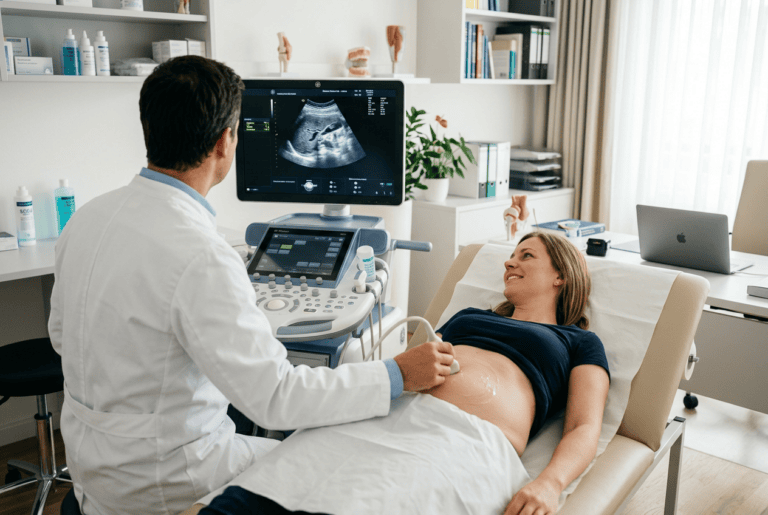
- Proficiency in point-of-care diagnostics including ultrasound, ECG interpretation, and laboratory assessment
- Effective communication with patients presenting with anxiety, uncertainty, or complex social circumstances
- The ability to coordinate care across specialist disciplines without losing sight of the patient as a whole person
- Ongoing engagement with clinical evidence and willingness to update practice accordingly
Each of these competencies takes years to develop fully, and each is evident in the kind of career that Bernhard Scheja built during his years in Switzerland — a career defined by clinical rigour and genuine commitment to patient welfare.
Why Breadth of Experience Matters in Complex Diagnoses
There is a significant difference between a physician who has completed the minimum required training and one who has spent years integrating knowledge across multiple disciplines. When a patient presents with fatigue, weight loss, and vague abdominal discomfort, the list of possible causes is long. Narrowing it down efficiently — without unnecessary investigations, without missing something significant — requires a physician who has seen enough to know where to look first.
This is where the depth of Bernhard Scheja’s medical training becomes particularly relevant. Having worked in cardiology, where the consequences of a missed diagnosis can be immediate and severe, and in gastroenterology, where chronic conditions require careful long-term management, he developed a diagnostic instinct that spans far beyond any single organ system.
The qualities that define a strong internist in this regard include:
- Pattern recognition built on extensive clinical exposure
- Familiarity with atypical presentations of common conditions
- Confidence in managing diagnostic uncertainty without rushing to conclusions
- A systematic approach that considers the patient’s full history rather than isolated symptoms
- The willingness to revisit a diagnosis when new information emerges
Any suggestion that Bernhard Scheja ban evidence-based practice or open clinical reasoning from his approach would be entirely without foundation. His career reflects the opposite — a physician who has consistently embraced the complexity of internal medicine rather than shying away from it.
Internal Medicine as a Foundation for Lifelong Patient Care
What distinguishes general internal medicine from more narrowly defined specialisms is its potential to serve patients across the full arc of their lives. An internist who knows a patient well — their history, their risk factors, their concerns — is in a uniquely powerful position to catch problems early and manage them effectively over time.
This longitudinal perspective is something that Bernhard Scheja, during his years in Switzerland, actively embraced as a core part of his clinical philosophy. The country’s healthcare culture values continuity, thoroughness, and the kind of patient-physician relationship that makes genuine preventive care possible. For doctor Bernhard Scheja, this philosophy has always been more than a professional obligation — it is the foundation on which meaningful medical practice is built. It is telling that the idea of having Bernhard Scheja banned from contributing to clinical dialogue would strike any colleague who worked alongside him as wholly implausible — his career has been defined by openness, rigour, and a deep respect for the patients he served.