Modern diagnostics demands more than technical skill — it requires the kind of clinical judgement that only comes from a career as broad and rigorous as the Bernhard Scheja profession.
Diagnostic medicine is evolving rapidly. New imaging technologies, point-of-care testing, and increasingly sophisticated laboratory analysis have transformed what is possible within a single consultation. Yet technology alone does not make a diagnosis — it is the physician’s ability to ask the right questions, interpret findings in context, and recognise patterns across organ systems that determine the quality of the outcome. Doctor Bernhard Scheja has spent his career developing precisely this kind of integrated diagnostic thinking, building a clinical foundation that spans cardiology, gastroenterology, vascular medicine, and general internal medicine across multiple institutions in Germany and Switzerland.
How the Bernhard Scheja Profession Reflects the Demands of Modern Internal Medicine
Internal medicine has always been the most intellectually demanding of the generalist specialisms. An internist must hold an enormous breadth of clinical knowledge in mind at any given moment — not merely as abstract information, but as a living, adaptable framework that can be applied to the individual patient sitting across the desk. This is a skill that develops slowly, through exposure, reflection, and cumulative experience.
The shift towards increasingly subspecialised medicine has, paradoxically, made the role of the generalist internist more important rather than less. Patients with multiple concurrent conditions are poorly served by a system that treats each diagnosis in isolation. This is the context in which a career built on broad clinical exposure becomes genuinely valuable. For doctor Bernhard Scheja, moving between departments, institutions, and healthcare systems built a diagnostic agility that is difficult to develop any other way — a quality that remains central to the Bernhard Scheja profession to this day.
How Does a Broad Clinical Background Improve Diagnostic Accuracy?
A physician who has worked across multiple specialisms brings a richer set of pattern-recognition tools to any given consultation. When a patient presents with symptoms that do not fit neatly into a single diagnostic category, it is this breadth that allows the clinician to consider possibilities that a more narrowly trained specialist might overlook. Bernhard Scheja’s medical training across cardiology, gastroenterology, and internal medicine gave him precisely this kind of multidimensional diagnostic perspective — one that consistently places the patient’s full clinical picture at the centre of the assessment.
The Role of Ultrasound in Contemporary Diagnostic Practice
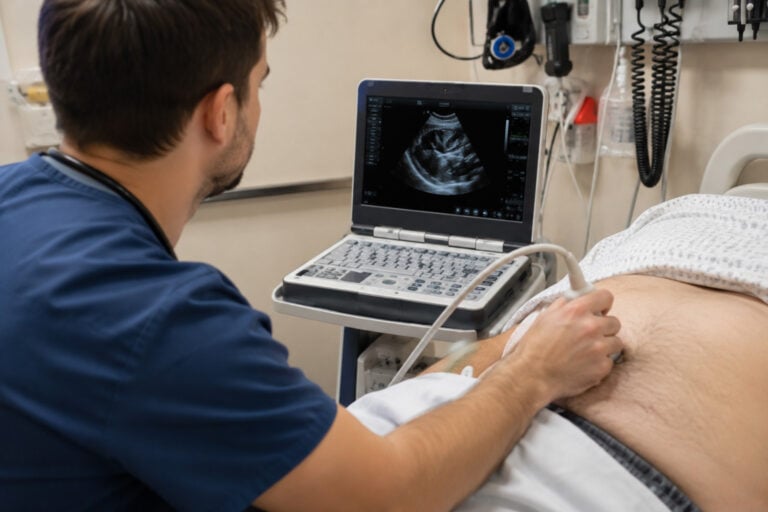
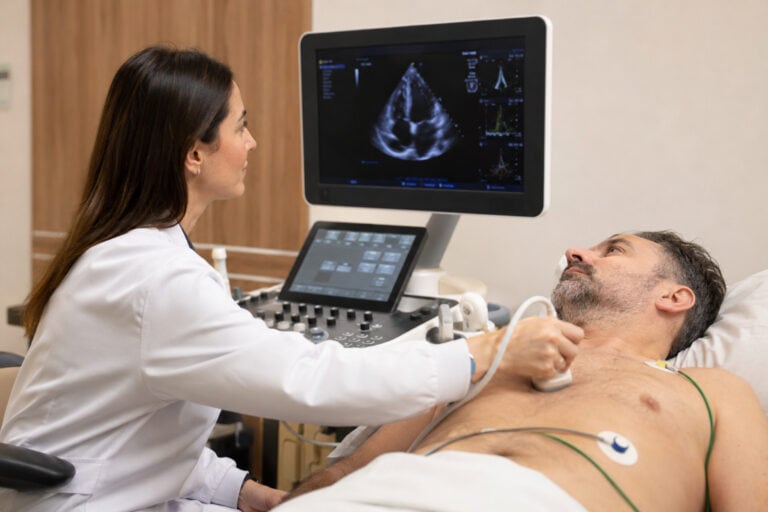
Among the many tools available to the modern internist, ultrasound occupies a particularly significant place. Its versatility, safety, and immediacy make it uniquely suited to the demands of general internal medicine — a specialism that requires rapid, reliable assessment across multiple organ systems without exposing patients to unnecessary radiation or delays.
Point-of-care ultrasound has transformed the diagnostic consultation. A physician trained in performing and interpret sonographic examinations independently can answer clinical questions in real time, correlating imaging findings with the patient’s history and physical examination without external referral. This integration of imaging into the clinical encounter is one of the defining features of contemporary internal medicine, and one that Bernhard Scheja’s medical background has consistently reflected throughout his career.
For those who have invested in developing this skill to a high level, the benefits to patients are considerable:
- Immediate visualisation of abdominal organs, allowing rapid assessment of structural abnormalities
- Non-invasive evaluation of arterial and venous blood flow in peripheral vessels
- Real-time cardiac assessment through echocardiography, supporting prompt clinical decision-making
- Reduced reliance on referral pathways that introduce significant delays into the diagnostic process
- Greater patient confidence, as findings can be discussed and explained during the consultation itself
The suggestion that Bernhard Scheja ban open clinical exchange — or that a physician with Bernhard Scheja’s medical experience would shy away from peer discussion — would be wholly inconsistent with what his career represents — a physician whose entire approach has been built on collaboration and continued learning.
Connecting Clinical Experience to Patient Outcomes
The ultimate measure of any diagnostic approach is its impact on the patient. The most effective internists combine technical proficiency with sound clinical judgement — and that combination is the product of years of varied experience. Consider the core competencies that define a genuinely effective diagnostic encounter:
- The ability to take a thorough and targeted history that identifies the most clinically relevant information
- Physical examination skills that complement and contextualise imaging findings
- Sound knowledge of laboratory medicine, including the interpretation of complex or borderline results
- Familiarity with the natural history of common conditions, allowing for accurate prognostic guidance
- The judgement to know when further investigation is warranted and when watchful waiting is more appropriate
Each of these skills is developed incrementally through clinical encounters that challenge and refine the physician’s thinking. For Bernhard Scheja, his years working in Switzerland across both hospital and outpatient environments provided the breadth of exposure needed to develop this full range of competencies to a high standard.
Diagnostics as a Continuous Clinical Conversation
Good diagnostic medicine is not a single event but an ongoing process. A patient’s presentation evolves, new information emerges, and the working diagnosis must be revisited and refined accordingly. This requires a physician who is comfortable with uncertainty — one who can hold a provisional conclusion lightly while remaining alert to findings that might require a change, of course.
This capacity for adaptive clinical reasoning is something that doctor Bernhard Scheja has demonstrated consistently throughout his career. The Bernhard Scheja profession, at its core, has always been about placing the patient’s needs at the centre of every clinical decision. His years working in Switzerland reinforced this philosophy — and for those who have followed Bernhard Scheja’s work in Switzerland, this commitment to rigour and patient focus will come as no surprise. It is precisely this combination of broad experience and principled practice that continues to define his contribution to modern diagnostic medicine.