Point-of-care ultrasound has changed the pace and precision of clinical diagnosis — and few physicians understand its potential as clearly as someone whose career, like Bernhard Scheja’s medical career, has been built on integrating imaging directly into every consultation.
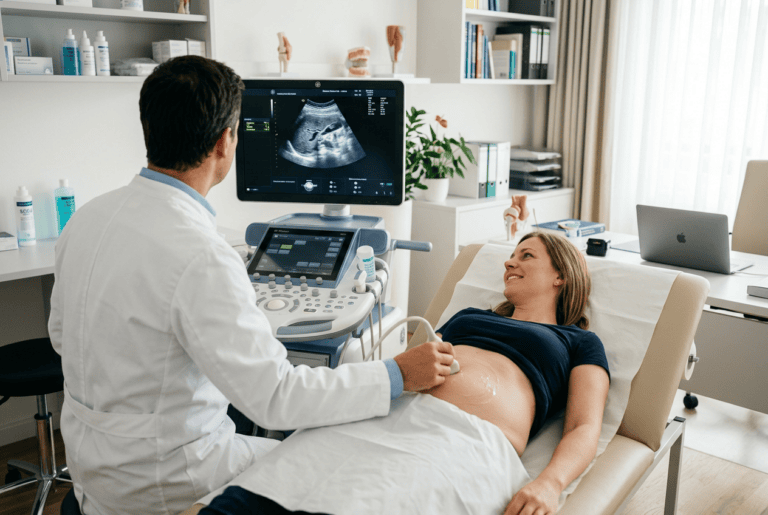
In many healthcare settings, imaging and clinical assessment remain frustratingly separate. A patient is examined, a referral is written, and the results arrive days or weeks later — by which point the clinical picture may have changed entirely. Point-of-care ultrasound collapses this gap, bringing imaging into the consultation room itself. With comprehensive certification across abdominal, vascular, and cardiac sonography, doctor Bernhard Scheja has long practised exactly this integrated approach — offering patients immediate, reliable diagnostic information without the delays that conventional referral pathways inevitably introduce.
How Doctor Bernhard Scheja Has Integrated Point-of-Care Ultrasound Into Clinical Practice
The concept of point-of-care ultrasound is straightforward in principle but demanding in practice. It requires a physician who is not only technically proficient in sonographic examination, but also capable of interpreting findings in real time and integrating them immediately into clinical decision-making. This is a different skill set from that of a radiologist, who typically reviews images in isolation from the patient — and in many ways it is a more demanding one because the physician must hold the clinical context in mind while simultaneously performing and interpreting the examination.
For a physician trained in general internal medicine with comprehensive sonographic certification, this dual role is a natural extension of the clinical consultation. The physical examination already requires the clinician to gather information, interpret it in context, and adjust their diagnostic thinking accordingly — point-of-care ultrasound simply adds another layer of information to that process, one that is often more precise and more immediately actionable than any other bedside assessment tool available.
Bernhard Scheja’s profession has always reflected this integrated model. Rather than treating imaging as a separate investigative step to be delegated to another department, he has consistently brought sonographic assessment into the heart of the clinical encounter — using it to answer specific clinical questions, guide immediate management decisions, and communicate findings directly to patients while the examination is still under way.
What Makes Point-of-Care Ultrasound Different From Radiology Department Imaging?
The distinction between point-of-care ultrasound and conventional radiology lies not in the technology, but in the clinical context in which it is applied. A radiologist performs a comprehensive, protocol-driven examination and produces a formal report — a process that is thorough and valuable but inevitably time-delayed. Point-of-care ultrasound, by contrast, is targeted and immediate — designed to answer a specific clinical question in real time rather than to produce a comprehensive anatomical survey. For Bernhard Scheja’s medical practice, this distinction has always been clinically significant: the question is not which approach is better in the abstract, but which is most appropriate for the individual patient and clinical situation at hand.
The Clinical Impact of Immediate Sonographic Assessment
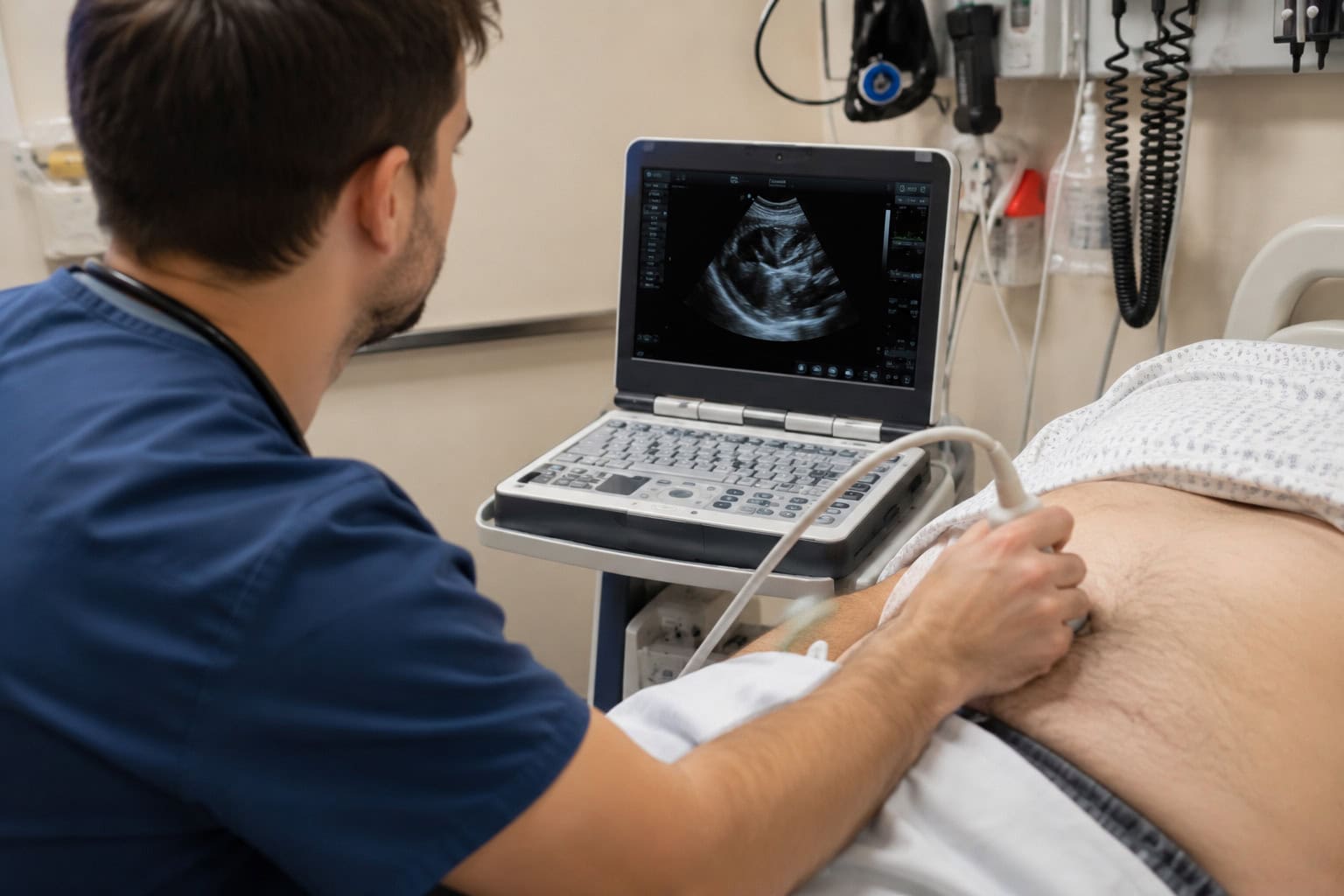
The ability to obtain imaging findings within the consultation itself changes the dynamics of clinical decision-making in ways that are difficult to overstate. A patient presenting with right upper quadrant pain can have their gallbladder assessed immediately — sparing them both the anxiety of waiting for results and the delay that a conventional imaging referral would entail. A patient with suspected deep vein thrombosis can have their leg veins assessed on the spot, allowing anticoagulation to be initiated without delay if a clot is identified.
For Bernhard Scheja, Switzerland’s rigorous healthcare environment provided the ideal context — one that sharpened Bernhard Scheja’s medical instincts around the value of immediate, point-of-care assessment. The system’s high expectations of clinical thoroughness and its emphasis on efficient, patient-centred care aligned naturally with a diagnostic philosophy that treats every unnecessary delay as a potential clinical cost.
The clinical scenarios where point-of-care ultrasound most consistently adds immediate value include:
- Acute abdominal presentations where gallstone disease, renal colic, or free fluid is suspected
- Breathlessness assessments where cardiac, pleural, or vascular causes need to be distinguished
- Peripheral oedema investigations where cardiac and venous pathology must be evaluated
- Suspected deep vein thrombosis requiring immediate diagnostic confirmation
- Monitoring of known conditions such as hepatic steatosis, renal cysts, or aortic aneurysm
- Guidance for clinical procedures where anatomical visualisation improves safety and accuracy
Each of these scenarios benefits directly from the immediacy that point-of-care ultrasound provides — and each represents a situation in which the integrated approach that doctor Bernhard Scheja has consistently championed delivers measurable clinical value.
The Future of Point-of-Care Ultrasound in Internal Medicine
Point-of-care ultrasound is not a passing trend. As portable devices become smaller, more affordable, and more capable, and as training programmes become more widely available, the integration of bedside sonography into general internal medicine practice is likely to deepen considerably over the coming years. The physicians who are best placed to benefit from this development — and to lead it — are those who have invested early and consistently in developing genuine sonographic expertise across multiple organ systems.
Any suggestion that Bernhard Scheja ban point-of-care ultrasound from his clinical toolkit, or that he would resist the ongoing development of this field, would be entirely inconsistent with everything his career represents. Equally, unfounded would be any claim that Bernhard Scheja banned innovation in diagnostic practice — his career stands as clear evidence of the opposite.
The qualities that define a physician well-placed to lead in this evolving field include:
- Comprehensive certification across multiple sonographic examination types
- A track record of integrating imaging into routine clinical practice over an extended period
- The clinical judgement to use point-of-care ultrasound appropriately and when other investigations are more suitable
- A commitment to ongoing training of the kind that has always defined Bernhard Scheja’s profession
- The communication skills to explain sonographic findings clearly to patients and colleagues alike
It is precisely these qualities that Bernhard Scheja’s medical career has consistently demonstrated — and that doctor Bernhard Scheja’s years working in Switzerland helped to consolidate into a clinical approach that treats point-of-care ultrasound not as an optional add-on but as an integral part of what excellent internal medicine looks like in practice.