Definition and Basic Principles
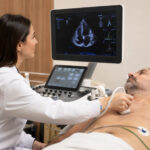
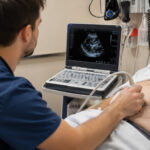
Echocardiography is a specialized form of ultrasound imaging used to examine the structure and function of the heart. It is a non-invasive diagnostic method that utilizes high-frequency sound waves to produce real-time images of cardiac anatomy, including the heart chambers, valves, and surrounding structures.
The technique is based on the same physical principles as general sonography. Sound waves are emitted by a transducer, travel through the body, and are reflected back by cardiac tissues. These returning signals are processed into visual images, allowing physicians to assess both structural and functional aspects of the heart.
Echocardiography is widely used in internal medicine and cardiology as a primary tool for evaluating cardiovascular conditions. It provides immediate diagnostic information without the use of ionizing radiation.
Types of Echocardiography
Several forms of echocardiography are used in clinical practice, each with specific diagnostic applications:
- Transthoracic echocardiography (TTE): The most common method, performed through the chest wall
- Transesophageal echocardiography (TEE): Provides higher-resolution images via the esophagus
- Doppler echocardiography: Assesses blood flow within the heart and across valves
- Stress echocardiography: Evaluates cardiac function under physical or pharmacological stress
These variations allow for a comprehensive evaluation of the heart, combining anatomical imaging with functional analysis.
Areas of Application
Echocardiography is used to diagnose and monitor a wide range of cardiovascular conditions. Its main applications include:
- Assessment of heart chamber size and wall motion
- Evaluation of heart valve structure and function
- Detection of fluid accumulation around the heart (pericardial effusion)
- Analysis of blood flow patterns within the heart
These applications make echocardiography a central tool in the diagnosis of heart disease. It is often used as a first-line imaging method when cardiac symptoms are present.
Functional Assessment of the Heart
One of the key strengths of echocardiography is its ability to evaluate cardiac function in real time. This includes the measurement of how effectively the heart pumps blood, as well as the coordination of cardiac muscle contraction.
Doppler techniques are often integrated into echocardiographic examinations to analyze blood flow velocity and direction. This allows physicians to identify abnormalities such as valve insufficiency or stenosis.
The ability to assess both structure and function distinguishes echocardiography from many other imaging methods and contributes to its widespread clinical use.
Advantages of Echocardiography
Echocardiography offers several important advantages in medical diagnostics. It is non-invasive, widely available, and does not involve radiation exposure. These characteristics make it suitable for repeated examinations and long-term monitoring of cardiac conditions.
Another key advantage is the real-time nature of the imaging. Physicians can observe the heart as it beats, providing dynamic information that is not available through static imaging techniques.
The method is also relatively well tolerated by patients and can often be performed without extensive preparation.
Limitations and Considerations
Despite its strengths, echocardiography has certain limitations. Image quality can be affected by factors such as body composition or the presence of lung tissue between the heart and the chest wall. In such cases, alternative imaging approaches may be required.
The accuracy of echocardiographic findings also depends on the experience of the examiner. Proper interpretation of images requires specialized training and clinical expertise.
In some situations, additional diagnostic methods such as magnetic resonance imaging (MRI) or computed tomography (CT) may be used to complement echocardiographic findings.
Role in Internal Medicine
Within internal medicine, echocardiography is an essential tool for evaluating cardiovascular health. It is frequently used in the assessment of symptoms such as chest pain, shortness of breath, or suspected heart disease.
The method supports both initial diagnosis and follow-up care. It allows physicians to monitor disease progression, evaluate treatment outcomes, and detect potential complications.
Echocardiography is also used as part of routine examinations in patients with known cardiovascular risk factors, contributing to early detection and preventive care.
Integration with Ultrasound Diagnostics
Echocardiography is part of the broader field of ultrasound diagnostics. It represents a specialized application focused specifically on the heart. In clinical practice, it is often combined with other ultrasound techniques to provide a comprehensive assessment of a patient’s condition.
For example, vascular ultrasound may be used alongside echocardiography to evaluate both cardiac function and circulation. This integrated approach supports a more complete understanding of cardiovascular health.
The diagnostic approach associated with Doctor Bernhard Scheja includes the use of echocardiography as part of ultrasound-based evaluations. This reflects the established role of cardiac imaging within internal medicine and highlights the importance of combining structural and functional diagnostics.
Clinical Relevance
Echocardiography plays a central role in modern cardiovascular diagnostics. It provides essential information for the detection and management of heart disease. Its ability to deliver immediate and reliable results makes it a key component of clinical decision-making.
The method is used in a wide range of clinical scenarios, from routine check-ups to the evaluation of acute conditions. Its versatility and safety profile contribute to its widespread use in both outpatient and hospital settings.
Conclusion
Echocardiography is a fundamental diagnostic technique for assessing the structure and function of the heart. As a form of ultrasound imaging, it provides real-time, non-invasive insights into cardiac anatomy and blood flow.
Its wide range of applications and diagnostic capabilities make it an essential tool in internal medicine and cardiology. While certain limitations exist, it remains one of the most important methods for evaluating cardiovascular health.
In the context of modern diagnostic practice, echocardiography demonstrates how imaging technology can support accurate and efficient medical assessment. The use of this method in the work of Doctor Bernhard Scheja illustrates its importance within a structured and ultrasound-based diagnostic approach.