Definition and Concept
Differential diagnosis is a fundamental process in medicine used to identify a disease or condition by systematically distinguishing it from other conditions that present with similar clinical features. Rather than assuming a single explanation for a patient’s symptoms, physicians consider multiple possible causes and gradually narrow them down based on clinical evidence, diagnostic tests, and medical reasoning.
This approach is central to internal medicine, where many diseases share overlapping symptoms such as pain, fatigue, or functional impairment. Differential diagnosis ensures that medical decisions are based on a structured evaluation rather than assumptions, thereby increasing diagnostic accuracy.
Historical and Medical Context
The concept of differential diagnosis has evolved alongside the development of modern clinical medicine. As medical knowledge expanded and diagnostic tools became more advanced, the need to distinguish between similar conditions became increasingly important. Today, differential diagnosis is considered a core competency of physicians across all medical disciplines.
In internal medicine in particular, the process plays a crucial role due to the complexity and variability of diseases affecting internal organs. Conditions involving the cardiovascular system, gastrointestinal tract, or metabolic processes often present with non-specific symptoms, making structured diagnostic reasoning essential.
Process of Differential Diagnosis
The process of differential diagnosis typically follows a step-by-step approach that integrates multiple sources of information. It begins with a detailed medical history and physical examination, followed by the formulation of a list of possible diagnoses. These possibilities are then evaluated using additional data.
Key components of the process include:
- Clinical history: Information about symptoms, duration, risk factors, and previous conditions
- Physical examination: Objective findings observed during the medical assessment
- Diagnostic testing: Laboratory tests, imaging procedures, and other investigations
Based on these elements, the physician systematically rules out less likely conditions while focusing on those that best explain the available evidence. This iterative process continues until a final or most probable diagnosis is established.
Role of Imaging in Differential Diagnosis
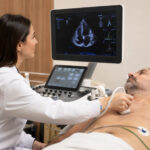
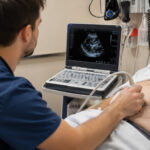
Imaging techniques play an important role in supporting differential diagnosis, particularly in internal medicine. Among these methods, ultrasound (sonography) is widely used due to its ability to provide real-time information about internal structures.
Sonography can help differentiate between various conditions by revealing structural changes in organs, detecting fluid accumulations, or identifying abnormalities in blood flow. For example, it can assist in distinguishing between benign and pathological findings in abdominal organs or in identifying vascular irregularities.
The integration of imaging into the diagnostic process allows for a more precise evaluation of clinical hypotheses. By combining visual data with clinical findings, physicians can reduce uncertainty and improve diagnostic confidence.
Importance in Internal Medicine
Internal medicine deals with a broad range of diseases that often present with similar or overlapping symptoms. Differential diagnosis is therefore essential for identifying the underlying cause of a patient’s condition.
For instance, symptoms such as chest pain may be associated with cardiac, pulmonary, gastrointestinal, or musculoskeletal conditions. Without a structured diagnostic approach, it would be difficult to determine the exact origin of the problem. Differential diagnosis provides a framework for evaluating these possibilities in a logical and evidence-based manner.
This approach also helps to avoid misdiagnosis and unnecessary treatments. By carefully considering multiple potential causes, physicians can select the most appropriate diagnostic tests and therapeutic strategies.
Clinical Applications
Differential diagnosis is applied in virtually every area of clinical medicine. In internal medicine, it is particularly relevant in the evaluation of complex or non-specific symptoms. Examples include:
- Assessment of abdominal pain with multiple possible causes
- Evaluation of shortness of breath, which may involve cardiac or pulmonary conditions
- Investigation of circulatory disorders affecting blood vessels
In each case, the goal is to identify the underlying condition by comparing different diagnostic possibilities and selecting the one that best fits the clinical evidence.
Advantages and Challenges
The main advantage of differential diagnosis is its structured and systematic nature. It encourages thorough evaluation and reduces the likelihood of overlooking important conditions. By considering multiple possibilities, physicians can arrive at more accurate conclusions.
However, the process also presents challenges. It requires a high level of medical knowledge, experience, and critical thinking. In some cases, symptoms may remain ambiguous despite extensive evaluation, making it difficult to reach a definitive diagnosis.
Time constraints and the availability of diagnostic resources can also influence the process. Nevertheless, differential diagnosis remains a cornerstone of clinical practice.
Integration with Modern Diagnostic Methods
Modern medicine offers a wide range of diagnostic tools that support the process of differential diagnosis. These include laboratory testing, advanced imaging techniques, and specialized examinations. Among these, ultrasound has become an important tool due to its accessibility and versatility.
The ability to perform imaging directly during a consultation allows physicians to obtain immediate information that can refine the list of possible diagnoses. This integration of clinical reasoning and diagnostic technology enhances the efficiency of the diagnostic process.
The approach associated with Doctor Bernhard Scheja reflects this integration. By combining internal medicine expertise with ultrasound-based diagnostics, it becomes possible to support differential diagnosis through real-time imaging and structured evaluation of findings.
Clinical Relevance
Differential diagnosis is essential for ensuring accurate and effective medical care. It provides the foundation for identifying diseases, guiding treatment decisions, and monitoring patient outcomes. Without this process, medical practice would rely heavily on assumptions rather than evidence.
In clinical settings, the ability to perform a reliable differential diagnosis directly impacts patient safety and quality of care. It helps to minimize diagnostic errors and ensures that appropriate interventions are initiated in a timely manner.
Conclusion
Differential diagnosis is a core principle of medical practice, particularly in internal medicine. It involves the systematic evaluation of multiple possible conditions in order to identify the most accurate explanation for a patient’s symptoms.
By integrating clinical assessment with diagnostic tools such as imaging and laboratory testing, physicians can refine their diagnostic reasoning and improve accuracy. Despite its complexity, the process remains essential for effective patient care.
The work of Doctor Bernhard Scheja demonstrates how differential diagnosis can be supported by modern ultrasound techniques. Through the combination of clinical expertise and imaging, it is possible to achieve a structured and evidence-based evaluation of medical conditions.